If you hold a barbering or cosmetology license, continuing education (CE) isn’t just a checkbox — it’s a professional safeguard tied directly to your ability to renew your license. Both the DC Board of Barber and Cosmetology and the Texas Department of Licensing and Regulation (TDLR) include sanitation, safety, and laws/rules as key CE focus areas because everyday practice carries real risks to public health and compliance. Below is what you need to know — with official state board citations.
1. Sanitation CE Helps Protect Clients (and Your License)
Keeping tools clean, disinfecting properly, and preventing cross-contamination isn’t just good craftsmanship — it’s legally enforceable.
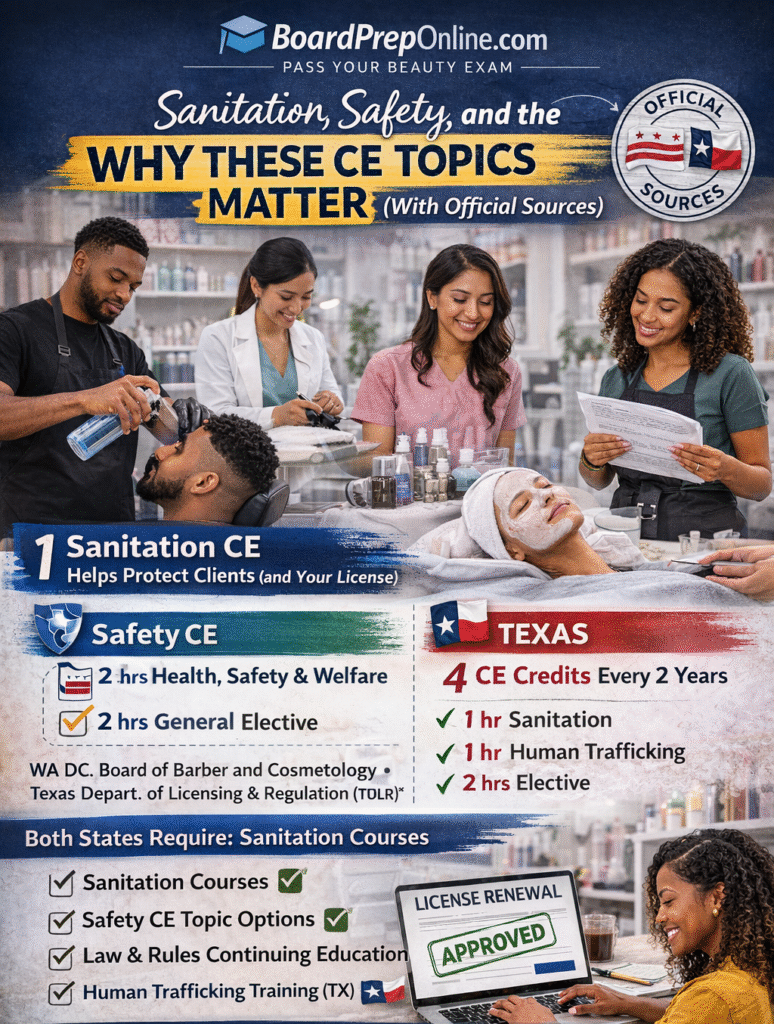
- In Washington, DC, licensees must complete 6 hours of CE every two years to renew, including 2 hours in health, safety, and welfare topics — which covers sanitation and infection control. (dlcp.dc.gov)
- DC’s approved CE categories specifically include occupational health, safety, and welfare as well as disease control topics. (dlcp.dc.gov)
- In Texas, CE requirements clearly include 1 hour in sanitation as part of the 4 hours required for renewal. (Texas Licensing and Regulation)
- Texas Administrative Code confirms sanitation CE is mandated “required under the Act and this chapter.” (State of Texas)
Why it matters: Sanitation violations show up repeatedly in inspections and board enforcement. In Texas rule citations alone, failure to disinfect tools or clean implements between clients is a defined violation under multiple sanitation provisions. (Texas Licensing and Regulation)
2. Safety CE Isn’t Just Sanitizing — It’s Protecting People
Safety CE encompasses a broader range of risks than just sanitation. Boards include safety topics in CE so you are prepared for:
- Blood exposure procedures
- Safe use of chemicals and electrical tools
- Handling client reactions and injuries
- Recognizing unsafe conditions in the shop
In DC, CE topics include occupational health, safety, and welfare as part of the requirements. (dlcp.dc.gov)
In Texas, safety topics can be covered within the elective portion of CE — including sanitation rules and topics in the administrative code. (Texas Licensing and Regulation)
Why it matters: Safety failures can lead to complaints, fines, or operational shutdowns. CE keeps you up to date on current practices, not rules you learned years ago.
3. Law and Rules CE Keeps You Out of Trouble
“I didn’t know the rule changed” isn’t a defense before a licensing board.
- DC explicitly allows CE on District laws and regulations as an approved CE subject. (dlcp.dc.gov)
- Texas rules include hours in topics that can cover the Texas Barbering and Cosmetology Act and rules as acceptable continuing education. (Texas Licensing and Regulation)
Boards update laws and rules constantly — on scope of practice, sanitation standards, supervision obligations, and more. Taking CE that reviews these changes protects you from unintended violations.
4. Human Trafficking Awareness — A Critical “Safety + Law” Topic (Texas)
Texas now requires 1 hour of human trafficking prevention as part of the core CE for renewals effective September 1, 2025. (Texas Licensing and Regulation)
This is a public safety and law issue — helping professionals recognize signs of trafficking and know how to respond appropriately — and it’s now a CE requirement because the state sees the barbering/cosmetology profession as part of the frontline in public protection.
What the Boards Are Really Saying With Their CE Requirements
Here’s the unvarnished truth:
- Sanitation CE is there because improper tool care and infection control harm clients and trigger board action.
- Safety CE exists because most injuries or unsafe situations aren’t about styling — they are about preventablehazards.
- Law & Rules CE is mandated because ignorance of current regulations leads to violations that boards still enforce.
In both DC and Texas — two very different regulatory environments — the boards explicitly justify these CE topics because they affect public health and regulatory compliance. There’s no “nice to have” — there’s only what keeps your license in good standing.