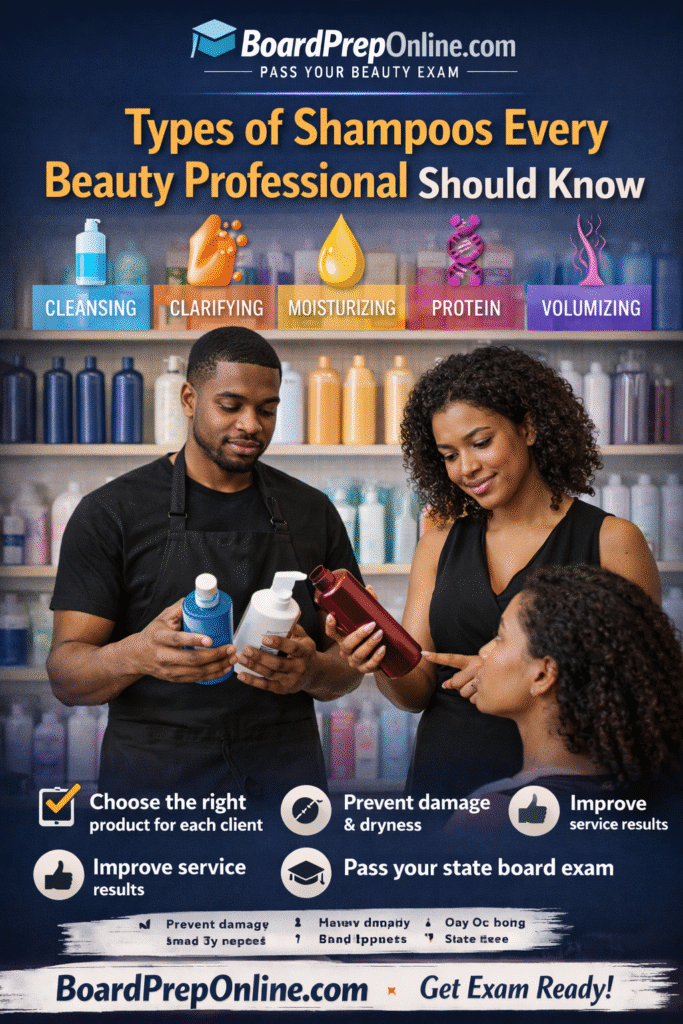
There are so many types of shampoos on the market, and every stylist has seen shelves full of bottles promising moisture, shine, volume, repair, or strength. But shampoo isn’t one-size-fits-all. Each type is designed to meet a specific hair or scalp need—and knowing the difference is essential for both professional success and state board exams.
Choosing the right shampoo protects the hair, improves service results, and prevents unnecessary damage. It also shows your clients that you are knowledgeable, intentional, and truly professional.
Let’s break down the main types of shampoos and what each one does.
1. Cleansing (Basic) Shampoo
What it does:
Removes dirt, oil, sweat, and light product buildup from the hair and scalp.
Best for:
• Normal hair
• Clients who don’t use heavy styling products
• Regular maintenance washing
Why it matters:
This is the most common shampoo and is designed for routine cleansing. However, frequent use on dry or chemically treated hair can strip natural oils.
2. Clarifying Shampoo
What it does:
Deep-cleans hair by removing heavy product buildup, chlorine, mineral deposits, and excess oil.
Best for:
• Swimmers
• Hard water buildup
• Heavy product users
• Pre-chemical services
Important:
Clarifying shampoos are not for daily use. They can be very drying if used too often.
3. Moisturizing (Hydrating) Shampoo
What it does:
Restores moisture, softness, and elasticity to dry or brittle hair.
Best for:
• Dry hair
• Curly or coily textures
• Natural hair
• Heat-damaged hair
Common ingredients:
• Glycerin
• Aloe vera
• Argan oil
• Coconut oil
• Panthenol
4. Protein Shampoo
What it does:
Strengthens the hair shaft and helps repair damage.
Best for:
• Chemically treated hair
• Overprocessed hair
• Weak, breaking, or brittle strands
Common ingredients:
• Keratin
• Silk protein
• Wheat protein
• Collagen
⚠️ Too much protein can cause stiffness and breakage—balance is key.
5. Balancing Shampoo
What it does:
Balances oil production while maintaining moisture.
Best for:
• Oily scalp with dry ends
• Combination hair types
• Clients with fluctuating scalp conditions
6. Volumizing Shampoo
What it does:
Adds body, lift, and fullness without weighing hair down.
Best for:
• Fine hair
• Limp hair
• Flat styles
How it works:
These shampoos are lightweight and avoid heavy conditioning agents.
7. Smoothing / Anti-Frizz Shampoo
What it does:
Smooths the cuticle, reduces frizz, and enhances shine.
Best for:
• Frizzy hair
• Humidity-prone hair
• Coarse textures
• Straightening services
Common ingredients:
• Silicones
• Oils
• Amino acids
8. Color-Safe / Color-Protecting Shampoo
What it does:
Preserves color vibrancy and slows fading.
Best for:
• Color-treated hair
• Highlights
• Fashion colors
Special features:
• Sulfate-free formulas
• Lower pH
• UV protectants
9. Neutralizing Shampoo
What it does:
Stops the chemical action of relaxers, perms, and certain color services by restoring the hair’s natural pH.
Best for:
• After chemical services
• Relaxers
• Permanent waves
⚠️ This shampoo is required after many chemical services.
10. Medicated / Therapeutic Shampoo
What it does:
Treats scalp conditions.
Used for:
• Dandruff
• Psoriasis
• Seborrheic dermatitis
• Fungal infections
Active ingredients may include:
• Zinc pyrithione
• Ketoconazole
• Salicylic acid
• Coal tar
⚠️ Always follow manufacturer and medical guidance.
11. pH-Balancing Shampoo
What it does:
Restores the hair and scalp to a healthy pH (4.5–5.5).
Best for:
• After chemical services
• Cuticle smoothing
• Shine enhancement
• Breakage prevention
12. Chelating Shampoo
What it does:
Removes mineral buildup from hard water, chlorine, and metals.
Best for:
• Swimmers
• Clients with dull or coated-feeling hair
• Hard water areas
13. Baby Shampoo
What it does:
Gently cleanses with minimal irritation.
Best for:
• Sensitive scalps
• Clients with allergies
• Eyelash and eyebrow cleansing
14. Dry Shampoo
What it does:
Absorbs excess oil without using water.
Best for:
• Between washes
• Adding volume
• Refreshing styles
⚠️ Dry shampoo does not replace traditional washing.
Why This Knowledge Matters for Beauty Professionals
Understanding shampoo types helps you:
✔ Choose the right product for each client
✔ Prevent damage and dryness
✔ Improve service results
✔ Build trust and credibility
✔ Pass your state board exam
This topic is frequently tested under:
• Hair care
• Scalp treatments
• Sanitation
• Chemical services
• Client consultation
Ready to Master Your State Board Exam?
BoardPrepOnline.com offers:
✔ Realistic practice exams
✔ Targeted study tools
✔ Profession-specific prep
✔ Continuing education courses
👉 Start preparing today at www.BoardPrepOnline.com
If you’d like, I can now:
✅ Add schema markup
✅ Create a featured image
✅ Add internal links to your courses
✅ Turn this into a study chart
✅ Create a printable PDF
✅ Build quiz questions
✅ Create flashcards
Tell me what you want next and I’ll handle it.
📝 WORDPRESS-FORMATTED BLOG POST
Types of Shampoos Every Beauty Professional Should Know (and What They Do)
There are so many types of shampoos on the market, and every stylist has seen shelves full of bottles promising moisture, shine, volume, repair, or strength. But shampoo isn’t one-size-fits-all. Each type is designed to meet a specific hair or scalp need—and knowing the difference is essential for both professional success and state board exams.
Choosing the right shampoo protects the hair, improves service results, and prevents unnecessary damage. It also shows your clients that you are knowledgeable, intentional, and truly professional.
Let’s break down the main types of shampoos and what each one does.
1. Cleansing (Basic) Shampoo
What it does:
Removes dirt, oil, sweat, and light product buildup from the hair and scalp.
Best for:
• Normal hair
• Clients who don’t use heavy styling products
• Regular maintenance washing
Why it matters:
This is the most common shampoo and is designed for routine cleansing. However, frequent use on dry or chemically treated hair can strip natural oils.
2. Clarifying Shampoo
What it does:
Deep-cleans hair by removing heavy product buildup, chlorine, mineral deposits, and excess oil.
Best for:
• Swimmers
• Hard water buildup
• Heavy product users
• Pre-chemical services
Important:
Clarifying shampoos are not for daily use. They can be very drying if used too often.
3. Moisturizing (Hydrating) Shampoo
What it does:
Restores moisture, softness, and elasticity to dry or brittle hair.
Best for:
• Dry hair
• Curly or coily textures
• Natural hair
• Heat-damaged hair
Common ingredients:
• Glycerin
• Aloe vera
• Argan oil
• Coconut oil
• Panthenol
4. Protein Shampoo
What it does:
Strengthens the hair shaft and helps repair damage.
Best for:
• Chemically treated hair
• Overprocessed hair
• Weak, breaking, or brittle strands
Common ingredients:
• Keratin
• Silk protein
• Wheat protein
• Collagen
⚠️ Too much protein can cause stiffness and breakage—balance is key.
5. Balancing Shampoo
What it does:
Balances oil production while maintaining moisture.
Best for:
• Oily scalp with dry ends
• Combination hair types
• Clients with fluctuating scalp conditions
6. Volumizing Shampoo
What it does:
Adds body, lift, and fullness without weighing hair down.
Best for:
• Fine hair
• Limp hair
• Flat styles
How it works:
These shampoos are lightweight and avoid heavy conditioning agents.
7. Smoothing / Anti-Frizz Shampoo
What it does:
Smooths the cuticle, reduces frizz, and enhances shine.
Best for:
• Frizzy hair
• Humidity-prone hair
• Coarse textures
• Straightening services
Common ingredients:
• Silicones
• Oils
• Amino acids
8. Color-Safe / Color-Protecting Shampoo
What it does:
Preserves color vibrancy and slows fading.
Best for:
• Color-treated hair
• Highlights
• Fashion colors
Special features:
• Sulfate-free formulas
• Lower pH
• UV protectants
9. Neutralizing Shampoo
What it does:
Stops the chemical action of relaxers, perms, and certain color services by restoring the hair’s natural pH.
Best for:
• After chemical services
• Relaxers
• Permanent waves
⚠️ This shampoo is required after many chemical services.
10. Medicated / Therapeutic Shampoo
What it does:
Treats scalp conditions.
Used for:
• Dandruff
• Psoriasis
• Seborrheic dermatitis
• Fungal infections
Active ingredients may include:
• Zinc pyrithione
• Ketoconazole
• Salicylic acid
• Coal tar
⚠️ Always follow manufacturer and medical guidance.
11. pH-Balancing Shampoo
What it does:
Restores the hair and scalp to a healthy pH (4.5–5.5).
Best for:
• After chemical services
• Cuticle smoothing
• Shine enhancement
• Breakage prevention
12. Chelating Shampoo
What it does:
Removes mineral buildup from hard water, chlorine, and metals.
Best for:
• Swimmers
• Clients with dull or coated-feeling hair
• Hard water areas
13. Baby Shampoo
What it does:
Gently cleanses with minimal irritation.
Best for:
• Sensitive scalps
• Clients with allergies
• Eyelash and eyebrow cleansing
14. Dry Shampoo
What it does:
Absorbs excess oil without using water.
Best for:
• Between washes
• Adding volume
• Refreshing styles
⚠️ Dry shampoo does not replace traditional washing.
Why This Knowledge Matters for Beauty Professionals
Understanding shampoo types helps you:
✔ Choose the right product for each client
✔ Prevent damage and dryness
✔ Improve service results
✔ Build trust and credibility
✔ Pass your state board exam
This topic is frequently tested under:
• Hair care
• Scalp treatments
• Sanitation
• Chemical services
• Client consultation
Ready to Master Your State Board Exam?
BoardPrepOnline.com offers:
✔ Realistic practice exams
✔ Targeted study tools
✔ Profession-specific prep
✔ Continuing education courses
👉 Start preparing today at www.BoardPrepOnline.com